
PAINTABLE PP
COMPOUNDS
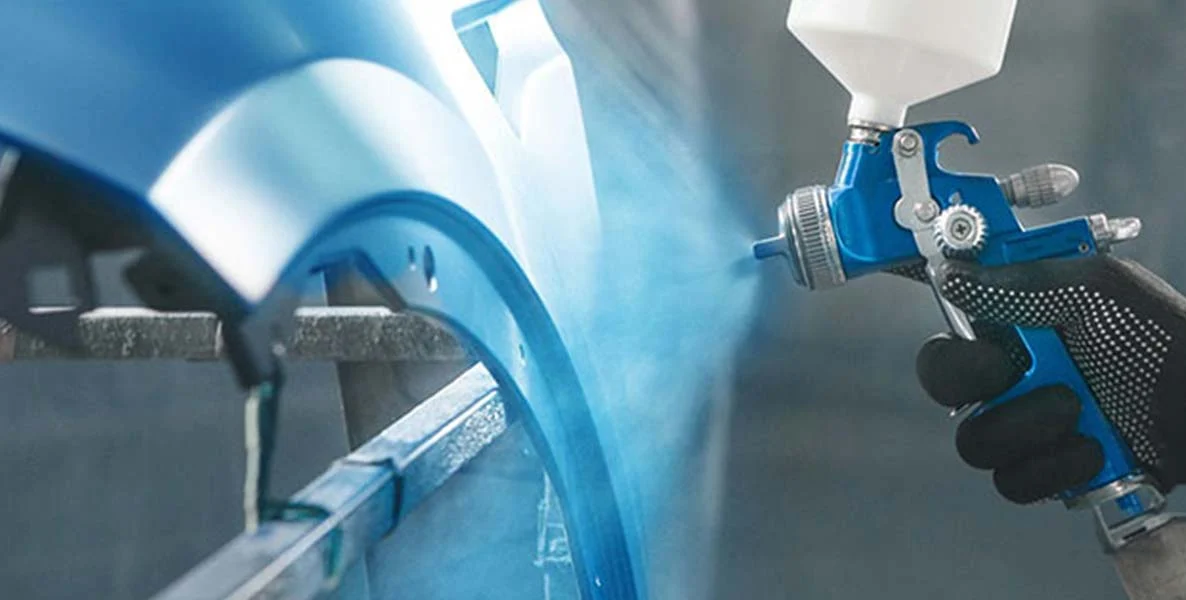
MANUFACTURING CHALLENGE:
For decades, automotive Tier-1 suppliers and OEMs have faced a persistent manufacturing tradeoff when producing high-gloss exterior trim, spoiler panels, mirror housings, and front grilles.
Acrylonitrile Butadiene Styrene (ABS) has remained the traditional default for painted exterior components. However, ABS presents significant cost pressures, higher density, lower moisture resistance, and supply-chain volatility compared to polyolefins.
Up to this point, substituting Polypropylene (PP) into existing ABS molds has been virtually impossible:
- Volumetric & Linear Shrinkage Mismatch: Unmodified standard PP exhibits mold shrinkage between 1.5% and 2.2% vs. ABS ~0.4–0.7%. Dropping standard PP into an existing tooling cavity designed for ABS results in severe dimensional distortion, warpage, and out-of-spec part fitment.
- Surface Energy & Paint Adhesion Deficit: PP’s non-polar nature gives it low surface energy, requiring aggressive flame/plasma pretreatments and expensive adhesion promoters to accept paint coatings without delamination.
- Property Gap: Replicating the flexural modulus and impact resistance balance of engineering-grade ABS using Polyolefin bases requires careful balance.
SUDARSSHAN SOLUTION: - PAINTABLE PP SERIES
Through proprietary modifier technology and tailored filler matrix engineering, Sudarsshan Pollyblends has engineered a specialized Paintable PP Compound series designed specifically for the automotive sector.
This drop-in material solution addresses the traditional technical barriers:
- Direct Mold Interchangeability (ABS Shrinkage Match): The compound is engineered to match the nominal linear shrink profile of standard ABS resins (~0.5%–0.7%). Automotive molders can run this high-performance PP compound directly inside existing ABS tooling without re-tooling, altering tool cavities, or re-engineering mold geometry.
- Superior Paintability & Long-Term Surface Energy Retention: By introducing internal surface energy enhancers into the polymer matrix during twin-screw compounding, the compound maintains an elevated surface energy profile over extended storage times. This eliminates strict paint-window limits after molding, yielding excellent cross-hatch paint adhesion (Class 0/5B equivalent under standard automotive paint testing) and reducing pre-treatment steps.
- Balanced Mechanical Performance Profile: Formulated using high-crystallinity PP bases combined with proprietary impact modification, the material achieves a flexural modulus and izod impact performance balance that rivals standard ABS grades, maintaining structural integrity across both high and sub-zero temperature environments.
DRIVING EFFICIENCY AND COST RATIONALIZATION
By deploying Sudarsshan Polyblends’ Paintable PP compound, automotive
manufacturers can:
- Eliminate New Tooling Capex: Transition existing product lines from ABS to
Polypropylene without modifying expensive hardened-steel injection molds.
- Achieve Structural Lightweighting: Capitalize on the lower specific gravity of modified polyolefins to reduce overall component weight.
- Minimize Scrap Rates: Prevent paint peeling, blistering, and dimensional out-of-spec rejections at the paint line stage.
- Cost Reduction: Reduce painting cost and improves the productivity.
VIKALP - RANGE OF ALTERNATE POLYMERS
AUTOMOTIVE SOLUTIONS
PACKAGING FILM SOLUTIONS
KEY OPERATIONAL ADVANTAGES FOR AUTOMOTIVE MANUFACTURERS
| Parameter | Traditional ABS | Standard PP | Sudarsshan Paintable PP Grade |
|---|---|---|---|
| Tooling Utility | ABS Molds | Requires New PP Molds | Existing ABS Tooling (Drop-in) |
| Material Density | ~1.04 – 1.06 g/cm³ | ~0.90 – 0.91 g/cm³ | Reduced (Lightweighting) |
| Moisture Absorption | Moderate | Negligible | Negligible |
| Paint Adhesion Prep | Standard | Heavy Pre-treatment / Primer | Direct Paintable / High Retention |
For Technical Information,
Sample Requests or Molding Trials