
PAINT ELIMINATION
SOLUTIONS
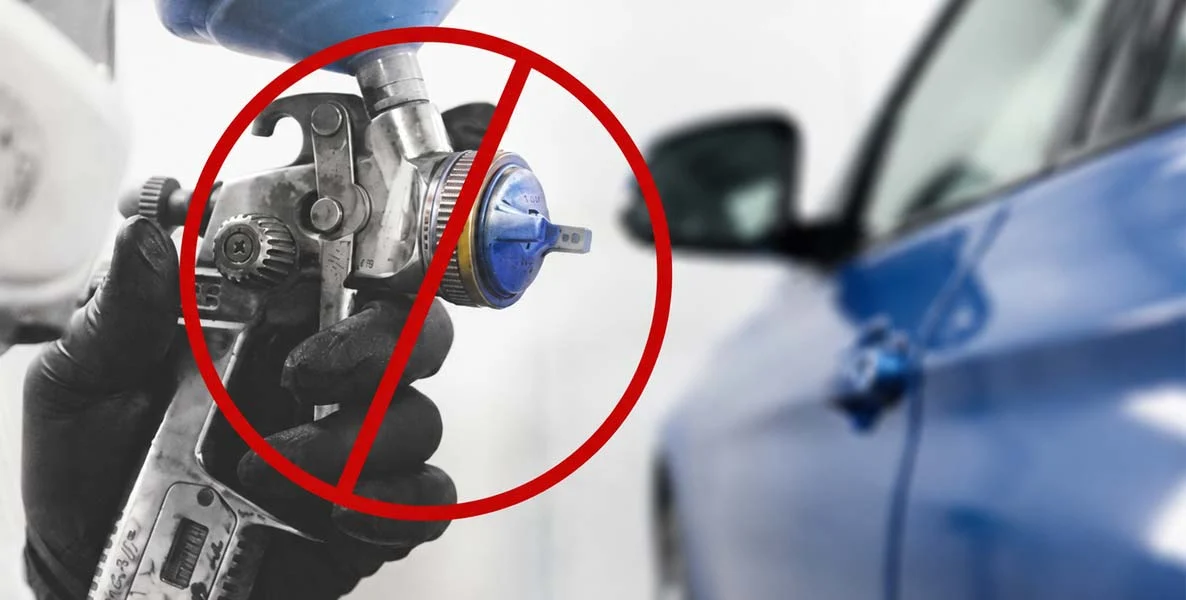
MANUFACTURING CHALLENGE:
Traditionally, this requires ABS engineering resins or secondary painting of PP components. Painting increases CAPEX, scrap, and VOC emissions, while switching to standard PP can require re-tooling due to differences in shrinkage, gloss, and stiffnes.
- Mold Shrinkage: ABS typically shrinks 0.4—0.7%, while PP shrinks 1.2—2.0%, causing dimensional inaccuracies and poor fitment.
- Surface Finish: PP's crystallinity results in lower gloss, while ABS delivers a high-gloss Class-A finish directly from the mold.
- Sustainability: Painted ABS complicates recycling and adds environmental impact, while styrenic polymers have a higher embodied carbon footprint.
SUDARSSHAN SOLUTION:
Sudarsshan Pollyblends has introduced a patented high-gloss PP compound engineered to solve this industry dilemma directly on the production line—delivering lower total part costs, a reduced carbon footprint, and complete paint elimination.
PRODUCTION & STRATEGIC IMPACT
By switching to Sudarsshan's patented compound, OEM & Tier-I manufacturers achieve a clear triple win:
- Economic: 15%—20% direct reduction in total raw material spend per part, plus complete removal of secondary painting line costs, paint scrap losses, and inter-factory transport.
- Operational: Zero re-tooling required—drop the material straight into existing ABS injection molds without modifying cavity dimensions.
- Environmental: Reduced Scope 1 emissions (no paint ovens) and Scope 3 emissions (lower embodied resin carbon and component light-weighting).
PERCENTAGE COST REDUCTION + DENSITY ADVANTAGE = DOUBLE SAVINGS
Material substitution savings are often calculated purely on price-per-kilogram. However, because plastic resin is purchased by weight (kg) but parts are molded by volume (cm3), the lower density of Sudarsshan's compound creates an additive compounding cost benefit:
- Volumetric Weight Advantage: Standard ABS has a density of 'v 1.04—1.06 g/cm3, whereas Sudarsshan's compound maintains a density of 0.99—1.00 g/cm3. This yields a 5% to 6% mass reduction per part for the exact same mold volume.
- Direct Base Price Savings: The material delivers a 10% to 15% reduction in base resin cost per kilogram compared to prime automotive ABS grades.
- Cumulative Spend Reduction: Combining the lower price per kg with the volumetric mass savings generates an overall 15% to 20% total savings on raw material spend alone before accounting for the complete elimination of secondary painting costs.
ENVIRONMENTAL IMPACT & CIRCULAR ECONOMY ALIGNMENT
Shifting from painted ABS to Sudarsshan's unpainted polyolefin compound delivers a step-change reduction in lifecycle carbon intensity:
- Paint Elimination & Zero VOCs: Eliminating secondary painting removes hazardous VOC emissions, paint sludge disposal, and the high energy consumption of paint-curing ovens.
- 25%—35% Lower Embodied Carbon: Polymerizing standard ABS generates approximately 2.5 to 3.0 kg C02 per kg of resin. In contrast, polyolefin compounding produces roughly 1.5 to 2.0 kg C02 per kg, cutting raw material embodied carbon significantly.
- Single-Stream Recyclability (RIC #5): Unpainted high-gloss PP fits straight into standard PP recycling streams (Resin Identification Code 5) without pre-treatment, chemical stripping, or paint separation.
VIKALP - RANGE OF ALTERNATE POLYMERS
AUTOMOTIVE SOLUTIONS
PACKAGING FILM SOLUTIONS
COMPREHENSIVE MATERIAL & PERFORMANCE MATRIX
| Parameter | Standard Automotive ABS | Standard High-Gloss PP | Sudarsshan Patented PP |
|---|---|---|---|
| Material Density (g/cm³) | ~1.04 – 1.06 | ~0.90 – 0.92 | 0.99 – 1.00 |
| Mold Shrinkage (%) | 0.4 – 0.7% | 1.2 – 2.0% | 0.4 – 0.7% (Direct Mold Swap) |
| Volumetric Mass Savings | Baseline | ~13% weight reduction | 5% – 6% weight reduction |
| Base Material Cost (per kg) | Baseline | Lower | 10% – 15% Savings |
| Total Raw Material Spend | Baseline | High Tooling Cost Required | 15% – 20% Total Savings |
| Secondary Painting Needed? | Optional / Standard | Yes (for high gloss) | No (100% Paint Elimination) |
| Resin Embodied Carbon | ~2.5 – 3.0 kg CO₂/kg | ~1.5 – 2.0 kg CO₂/kg | 25% – 35% Lower CO₂ Footprint |
| Post-Consumer Recyclability | Complex (if painted) | Direct PP Stream | 100% Recyclable (RIC #5, Unpainted) |
| Tooling Investment | Baseline | Requires New Molds | ₹0 (Uses Existing ABS Molds) |
For Technical Information,
Sample Requests or Molding Trials